Computer Science Games
These seven free games take a computer apart. You count in binary, send Morse code on a brass telegraph key, flip the switches that every processor is built from, discover that a picture is only numbers describing light, sort a row of bars by hand to see what an algorithm costs, find a hidden number in ten guesses by halving, and watch a sat-nav search a city for the fastest route. Each one replaces a vague idea about computers with something you have actually operated.
- 7 free games
- Ages 8-18
- No download, no sign-up
What each game teaches
Binary & number systems
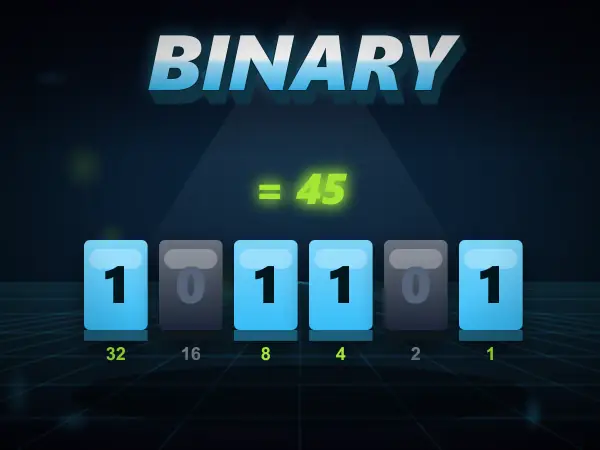
Binary Blocks
Build numbers out of ones and zeros using place values that double each step. Teaches base-2 counting and what a bit and a byte really are.
Play itBoolean logic & circuits
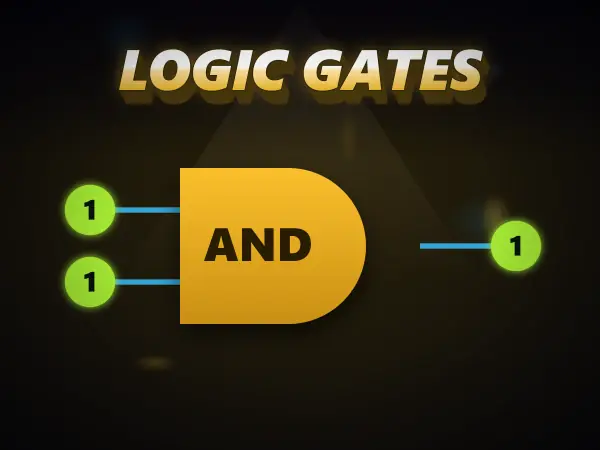
Logic Gates
Flip toggle switches on a circuit board and watch current flow through a chip to a bulb, one gate at a time. Teaches NOT, AND, OR and XOR - the switches every processor on earth is built from - then has you name mystery chips by testing them.
Play itDigital images & colour
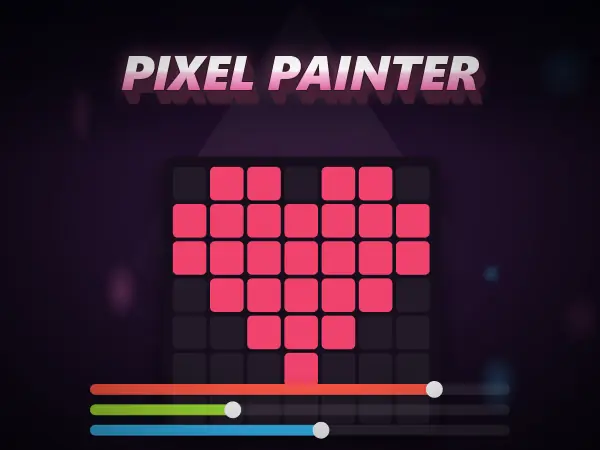
Pixel Painter
Copy a picture square by square, mixing each colour from red, green and blue light. Teaches what a pixel is and how RGB works - including why red and green make yellow.
Play itSorting algorithms
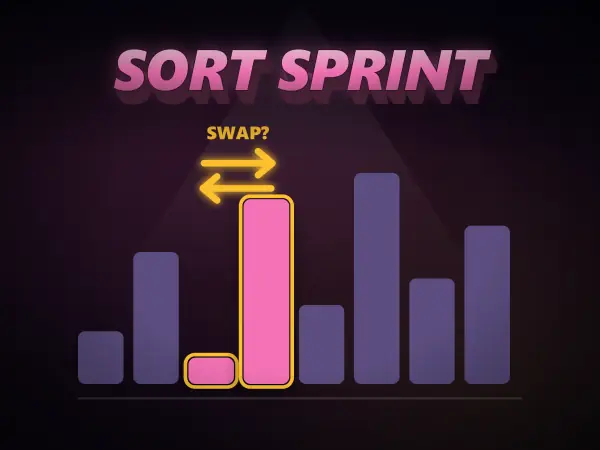
Sort Sprint
Become the inner loop of a bubble sort and make every comparison by hand. Teaches how a sorting algorithm works, and what it means for one to be slower than another.
Play itSearch & efficiency
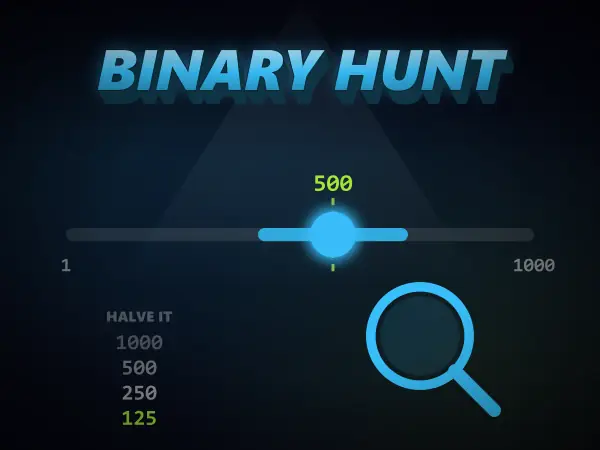
Binary Hunt
Find a secret number in ten guesses by always halving what is left. Teaches binary search, and why doubling the size of a problem can cost only one extra step.
Play itPathfinding & search algorithms
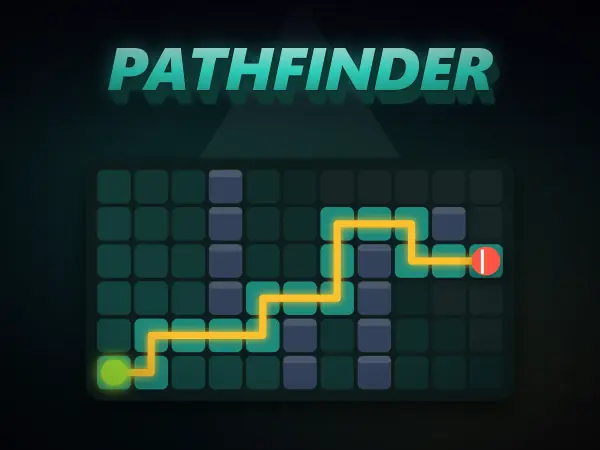
Pathfinder
Players watch breadth-first search, depth-first search and A* explore the same city map, and see every square each one checks. It teaches why BFS finds shortest routes, why DFS does not, and how A* uses a distance estimate to search far less, the idea behind sat-navs and game AI.
Play itCodes & data compression
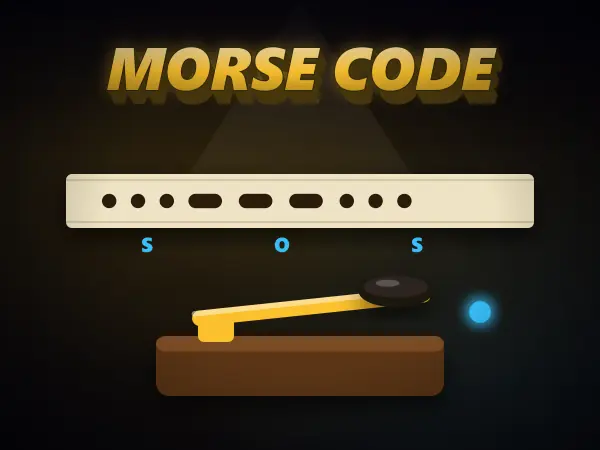
Morse Code
Players learn Morse code, one of the first digital codes, by keying it on a realistic telegraph key and decoding it by ear. They see that common letters got the shortest codes on purpose, which is the core idea behind data compression.
Play itHow a computer works, layer by layer
Almost nobody is taught what a computer is. They are taught what it does - run apps, hold photos, connect to things - which leaves the machine itself as magic. Computer science at its foundation is not magic and is not even especially complicated; it is a small number of ideas stacked on top of each other, and all of them can be handled directly.
The bottom of the stack is binary. A computer has no digits, only switches that are on or off, so every number it holds is built from place values that double: 1, 2, 4, 8, 16. Binary Blocks makes you assemble numbers that way until the pattern is obvious, which is also the moment 'a byte is eight bits' stops being a phrase and becomes a fact with a shape.
One level up are logic gates - circuits taking on-or-off inputs and producing one answer. Logic Gates puts a circuit board in front of you and introduces one gate at a time: flip the toggle switches, watch the current run along the copper tracks into a chip, and see whether the bulb lights. NOT, AND, OR and XOR, and the NAND and NOR you can build from them, are the complete vocabulary from which every processor on earth is assembled, and there is no step between them and a working CPU except quantity.
Pixel Painter covers the output side. A screen shows no pictures, only a grid of coloured squares, and every colour is three numbers saying how much red, green and blue light to mix. Mixing those yourself is where most people learn, with some surprise, that red and green light make yellow - because this is light being added, not paint being mixed.
The last two games are about algorithms, which is the study of how a job gets done and what that costs. Sort Sprint makes you the inner loop of a bubble sort so you feel every comparison, then shows what the same method would cost on a thousand items. Binary Hunt does the opposite: it shows how halving turns a thousand possibilities into ten guesses. Between them they teach the intuition behind efficiency long before anyone needs the notation for it.
Pathfinder takes that intuition onto a map. A sat-nav or a game character finds its way with a search algorithm, and here you watch three of them flood a night-time city: breadth-first search spreads out evenly and always finds the shortest route, depth-first search dives down one street and often takes the long way, and A* uses a guess of the distance left to head straight for the goal. Every number on screen comes from running the real algorithm on that map.
Morse Code goes back to where digital communication began. Every letter is a pattern of two signals, and the most common letters were given the shortest patterns on purpose - E is a single dot - which is the same trick modern compression uses to shrink a file. Tapping it out on a telegraph key makes the idea of encoding information physical.
Common questions
How do computers actually work?
At the bottom, a computer is billions of switches that are either on or off. Numbers are stored as patterns of those switches, which is binary. Small circuits called logic gates combine switches to produce answers, and stacking enough gates together gives you addition, comparison and eventually every instruction a processor can run. Everything above that - apps, images, video - is layers of convention on top of those same switches.
Why do computers use binary?
Because a switch reliably has two states and not ten. Building hardware that can tell 'on' from 'off' is easy and survives a bit of electrical noise; building hardware that could reliably distinguish ten different voltage levels would be far harder and far more fragile. Two states is the most robust possible choice, so everything else is built around it.
What is a logic gate, in simple terms?
A tiny circuit that takes two inputs, each on or off, and gives one output according to a fixed rule. AND outputs on only when both inputs are on, OR when either is, and XOR only when the two are different. Combine millions of them and you have a processor - there is genuinely nothing else in there.
Are these games useful for GCSE or school computer science?
They line up well with the foundation topics in most school curricula: binary and number representation, logic gates and truth tables, how images are stored, and the standard sorting and searching algorithms. They are best used to build intuition rather than to revise a specification, but the concepts are the same ones.
Learning earns Pixels
Every game here counts like the rest of Plixoo. Finishing a run earns Pixels, the first completion of each game is worth a bonus, and you spend them on avatars, frames and themes.